Skint
Make your Unity editor tools look like they belong together
- In development
- Tool
- Unity · Editor-only · IMGUI
- $25 — planned
- C# · IMGUI · ScriptableObject profiles · JSON presets
A theme engine and a set of styled IMGUI helpers, so your editor tools can carry your visual identity without hand-rolling a GUIStyle every time. Every colour is yours to set.
A UI Toolkit framework, a reskin of the Unity editor itself, or anything your players ever see.
Skint — the window
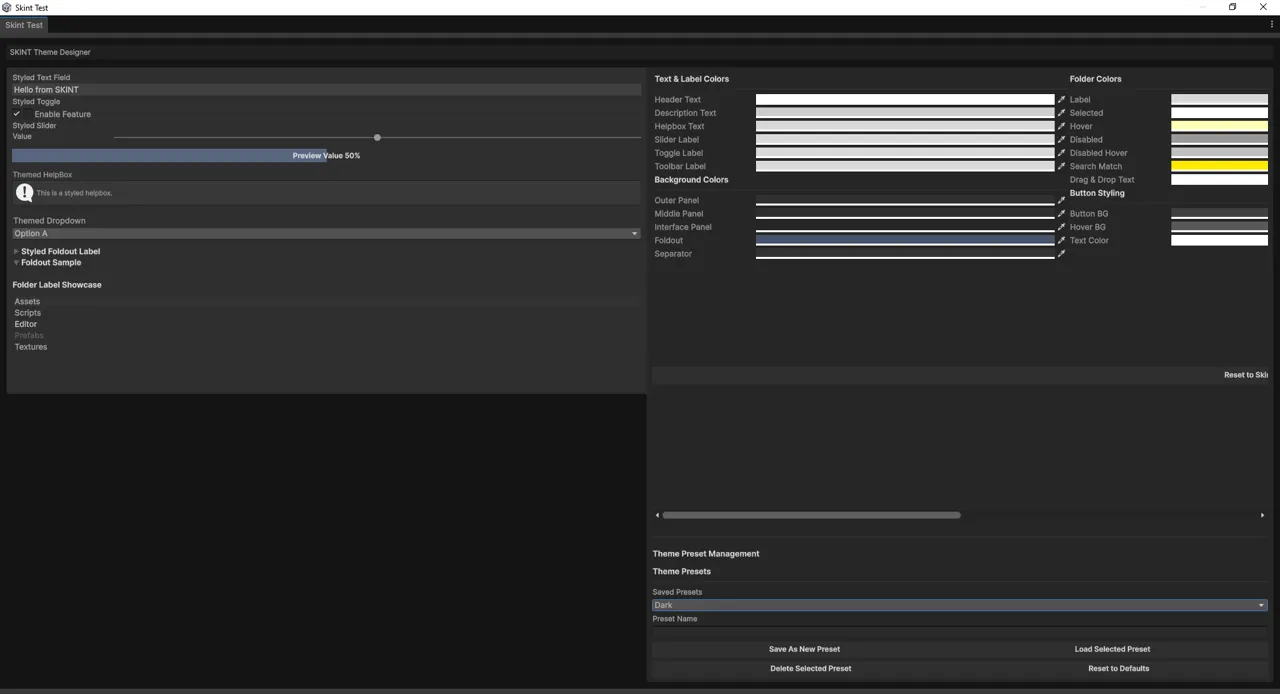
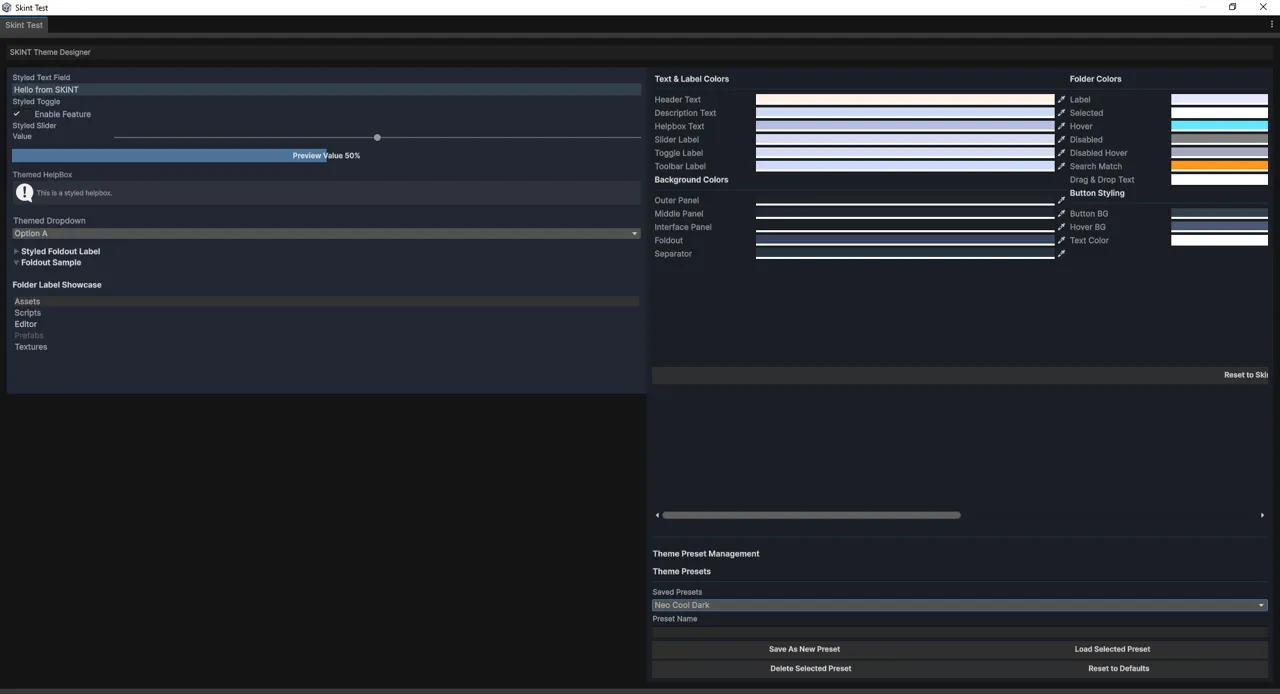
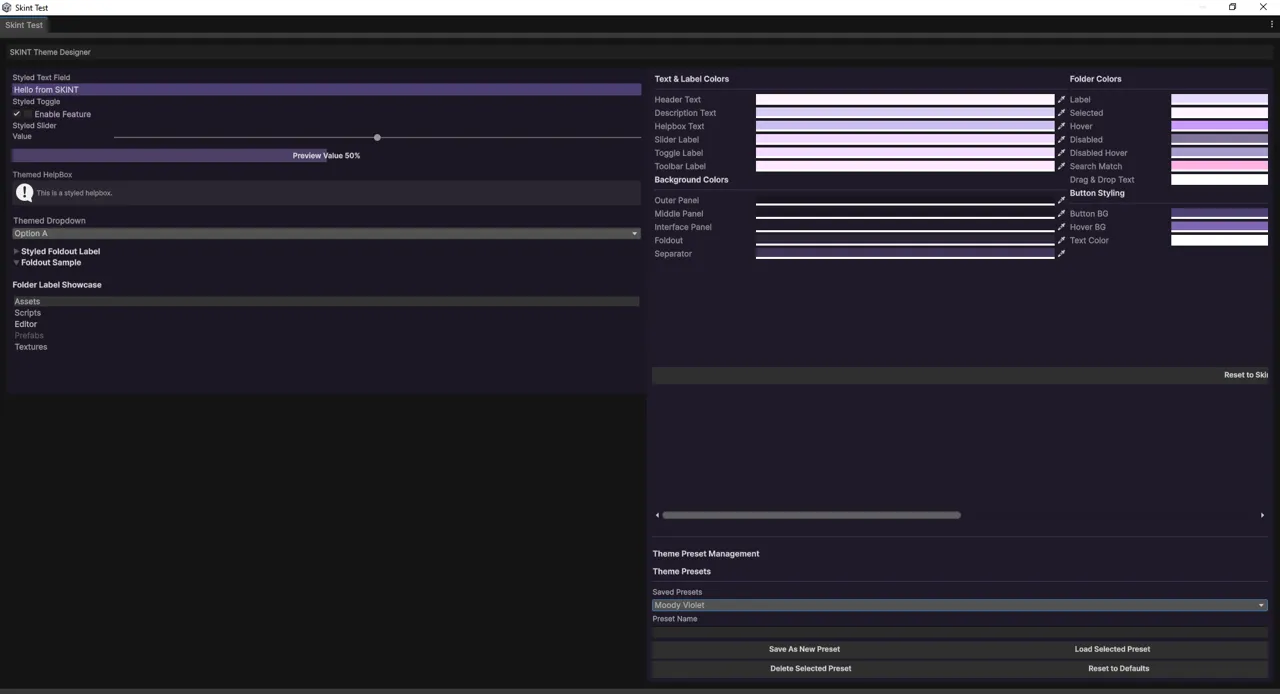
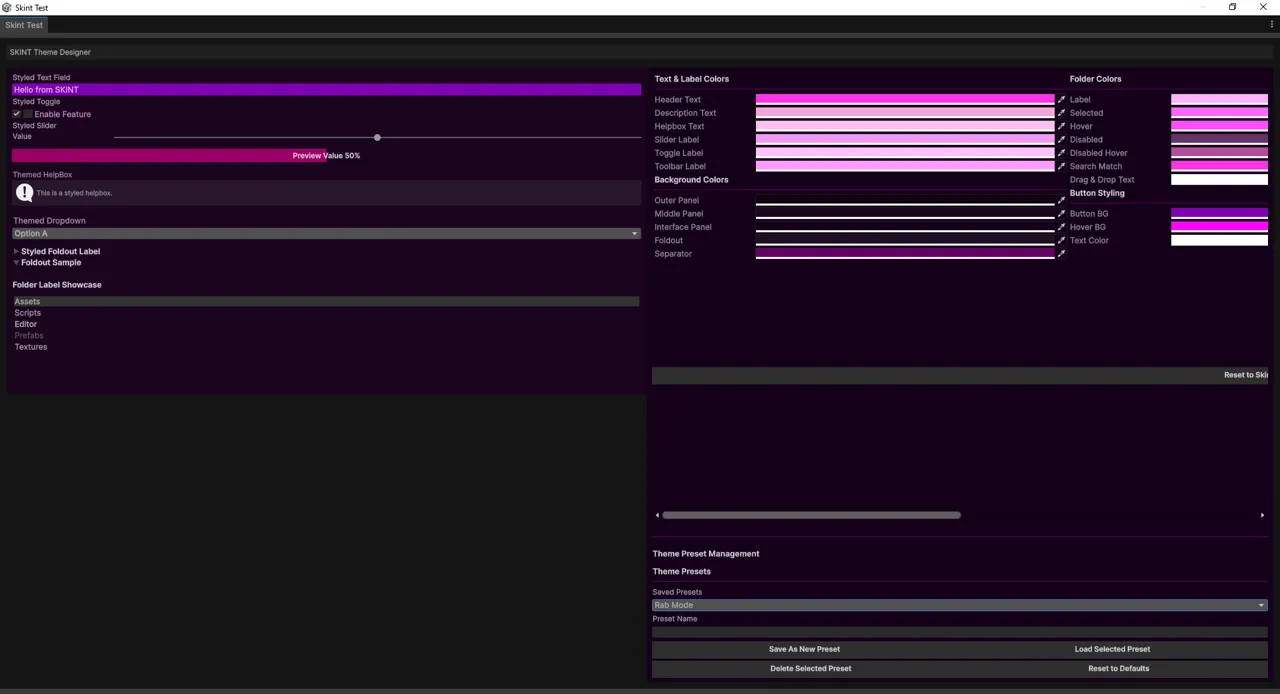
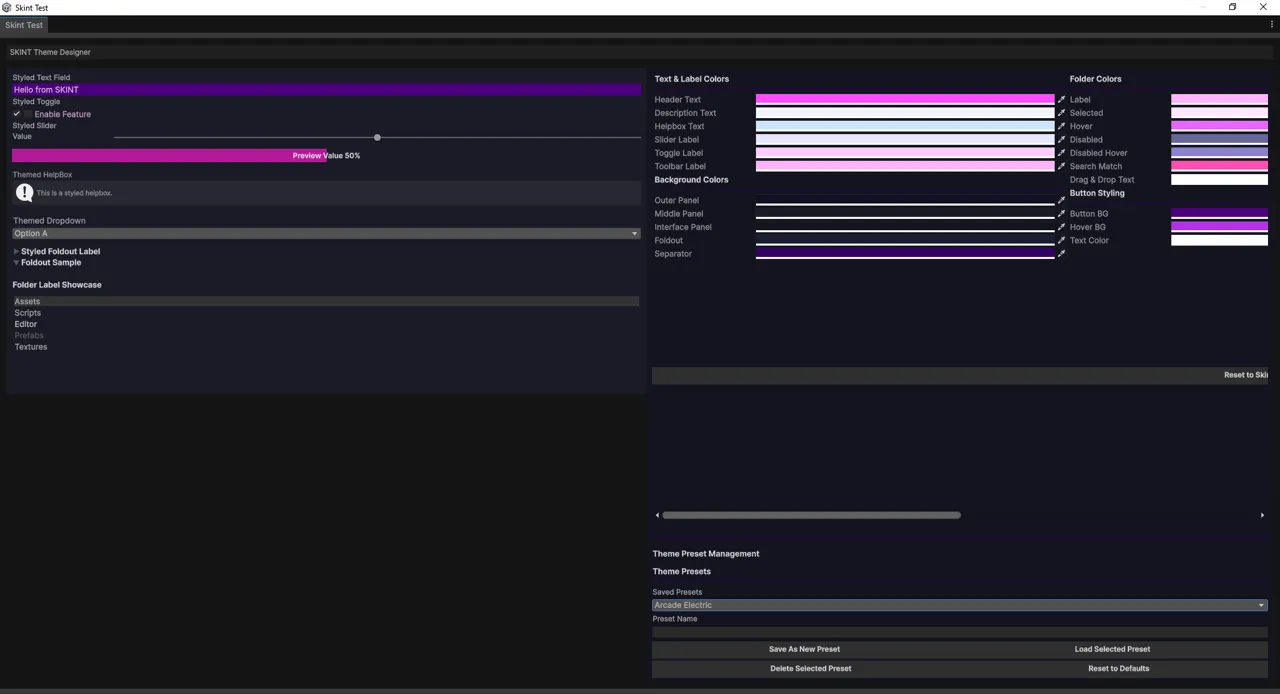
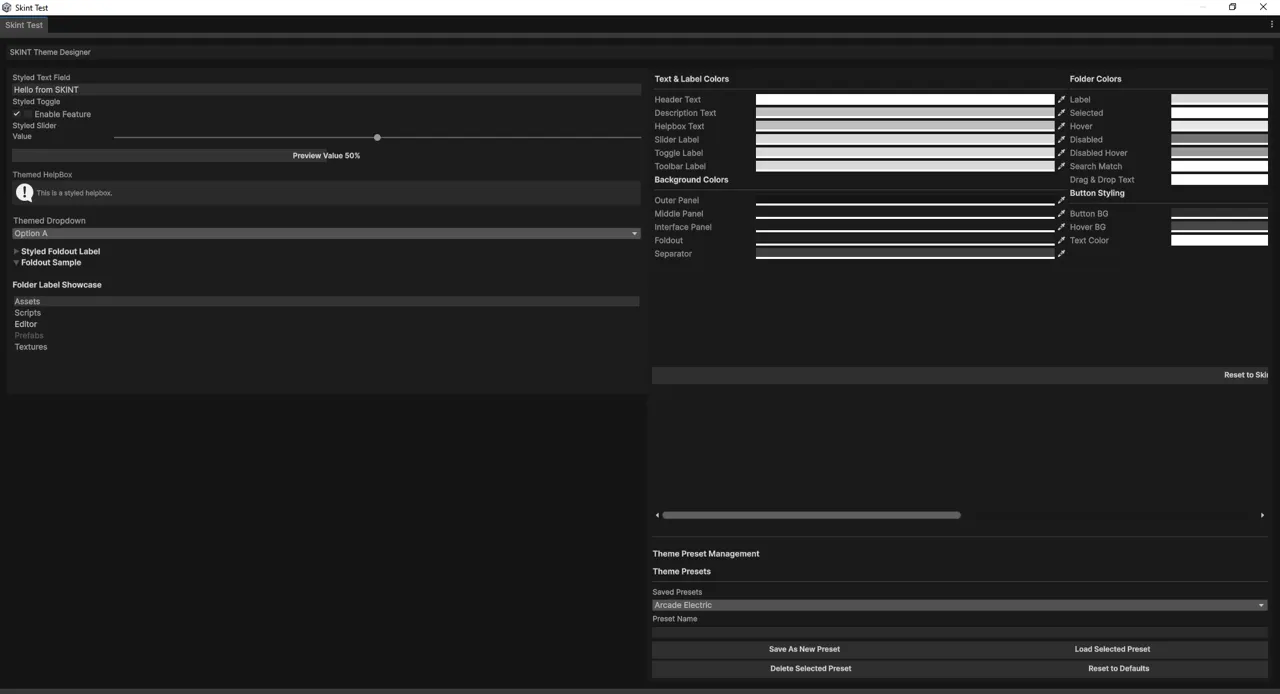
These six are the presets Skint ships with, and they are examples, not a range you pick from. Every colour in every one of them is a field you can change and save under your own name — including the loud ones, which exist to prove the engine will go that far rather than to suggest you should.
The problem it solves
Unity’s IMGUI gives you controls that look like Unity. That is usually the
right answer — a tool should look like the editor it lives in. But if you ship
several tools, or one large one, you quickly end up with a pile of inline
GUIStyle construction, inconsistent spacing, and panels that each drifted a
slightly different direction.
Skint puts that in one place.
How it works
Everything is driven from the Theme Designer above: a live preview on the left showing every control the theme touches, and the colours themselves on the right, grouped by what they apply to. Change a colour and the preview updates as you go, rather than after a recompile.
A theme profile holds the colours, fonts, panels, toolbars, foldouts, sliders,
help boxes and labels. A style cache turns that profile into real GUIStyle
objects once rather than per frame. Styled helpers — labels, buttons, toggles,
fields, groups, headers, separators and progress bars — draw from the active
theme with no manual style setup at the call site.
Themes save as named presets with JSON storage, per editor skin, so a dark theme and a light theme are separate presets rather than one theme fighting both. Presets can be saved, loaded, restored and recovered after deletion.
SkintLite
Skint has a second half that matters more than the first if you publish assets.
SkintLite is a small, baked-in styling helper designed to be shipped
inside your own asset. It gives your window consistent labels, buttons,
headers, help boxes and toggles without your buyers needing Skint, without a
theme file, and without adding a dependency to your package.
In other words: you get the polish, and your customers get no extra install step and nothing new to learn.
Where it is
Skint is real code and not yet released. It is the quietest project in this list — the work is done in bursts between the things with buyers waiting on them.